Ophthalmologist. Cornea and Refractive Surgery Specialist. Co-Director of CCCRP and the Dominican Republic Cornea Bank.
He earned his medical degree and completed his ophthalmology training at Tulane University (New Orleans, Louisiana), one of the most recognized medical institutions in the United States. He then completed a fellowship at the Bascom Palmer Eye Institute (Miami, Florida), consistently ranked as the world's number one ophthalmology department, where he specialized in Cornea and Refractive Surgery.
This training provided him with a solid foundation in the most advanced surgical techniques and a commitment to clinical research that he has maintained throughout his professional career.
Recognized as the national pioneer in the ReLEx SMILE procedure for laser vision correction. He serves as an instructor for this advanced technique, training other surgeons in the Dominican Republic and the region.
Recognized at national and international conferences for his development of corneal collagen crosslinking with riboflavin. He has presented on his experience combining SMILE with Advanced Surface Ablation (ASA) and crosslinking.
Specialist in managing patients with cataracts who previously underwent laser refractive surgery (PRK, LASIK, SMILE), cases requiring specialized intraocular lens calculations and advanced surgical planning.
Recognized as a leader in the Caribbean region in corneal ring (ICRS) placement. He adopted the CAIRS technique, using human corneal tissue segments, from early stages of keratoconus to reduce refractive defects.
Performs refractive cataract surgery, implanting specialty lenses to correct astigmatism and presbyopia. Also implants ICL (implantable contact lenses) for high myopia or thin cornea patients.
At Centro Láser, he has trained multiple Cornea and Refractive Surgery fellows. At Hospital Central de las Fuerzas Armadas, he leads the Cornea program educating ophthalmology residents.
Including complex post-refractive surgery cases
ReLEx SMILE, SBK, ASA
ICL, toric and multifocal lenses
Crosslinking, ICRS, CAIRS
Surgical procedures and technologies that Dr. Batlle Logroño has specialized in throughout his career.
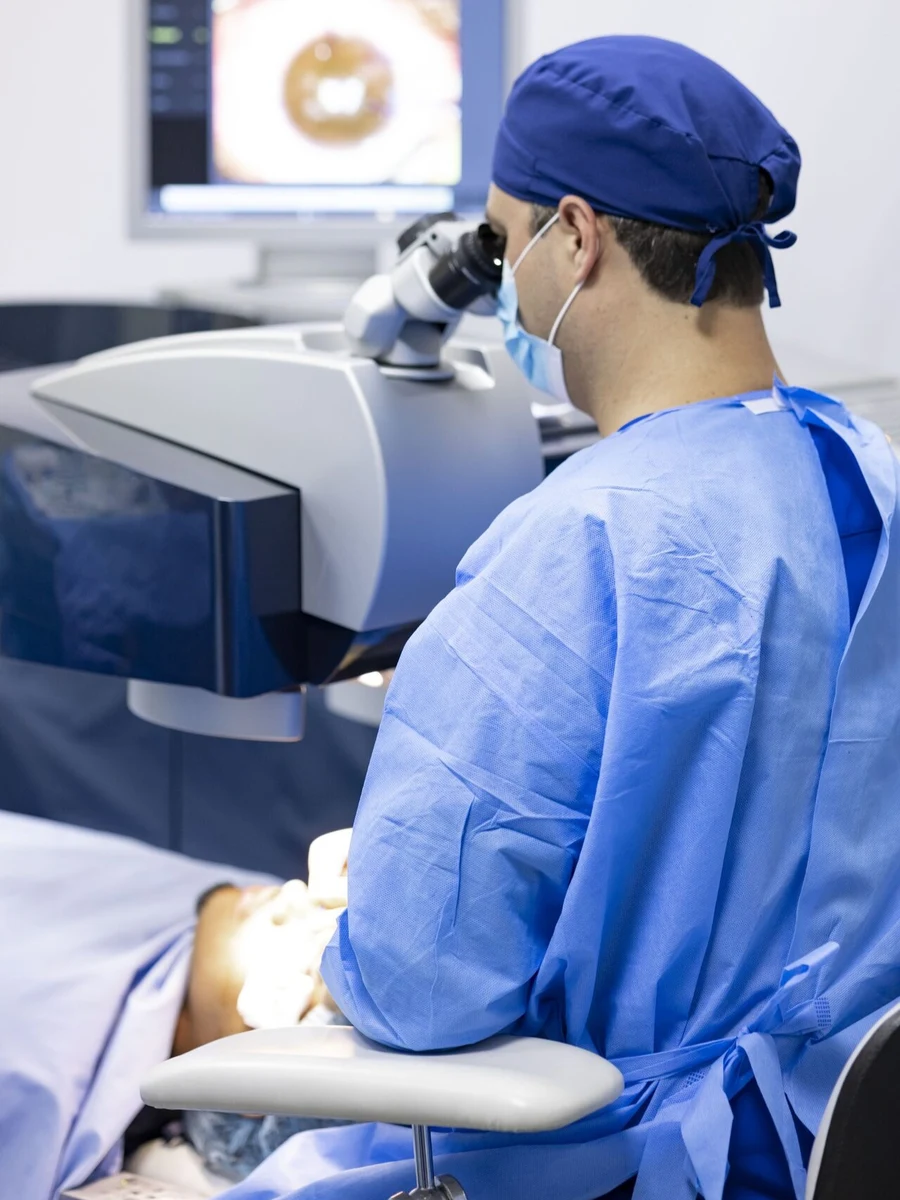
Refractive Lenticule Extraction is the most advanced and least invasive laser vision correction technique. Unlike traditional LASIK, it does not require creating a flap, which better preserves the biomechanical integrity of the eye and significantly reduces the risk of postoperative dry eye.
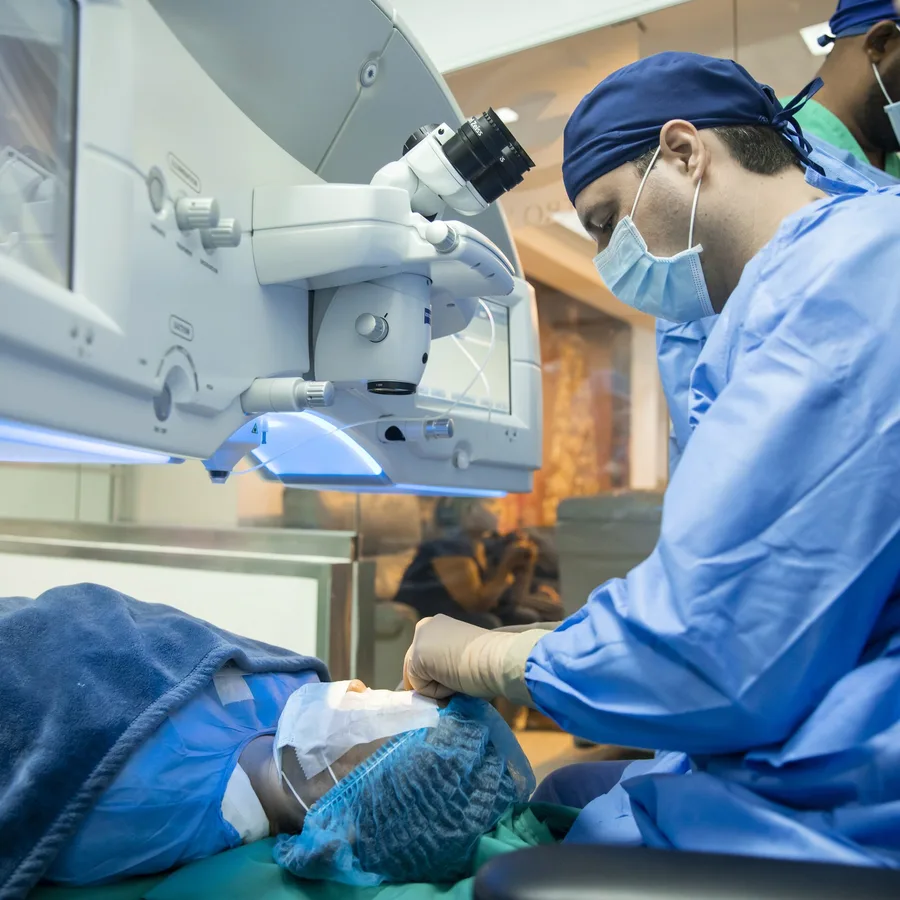
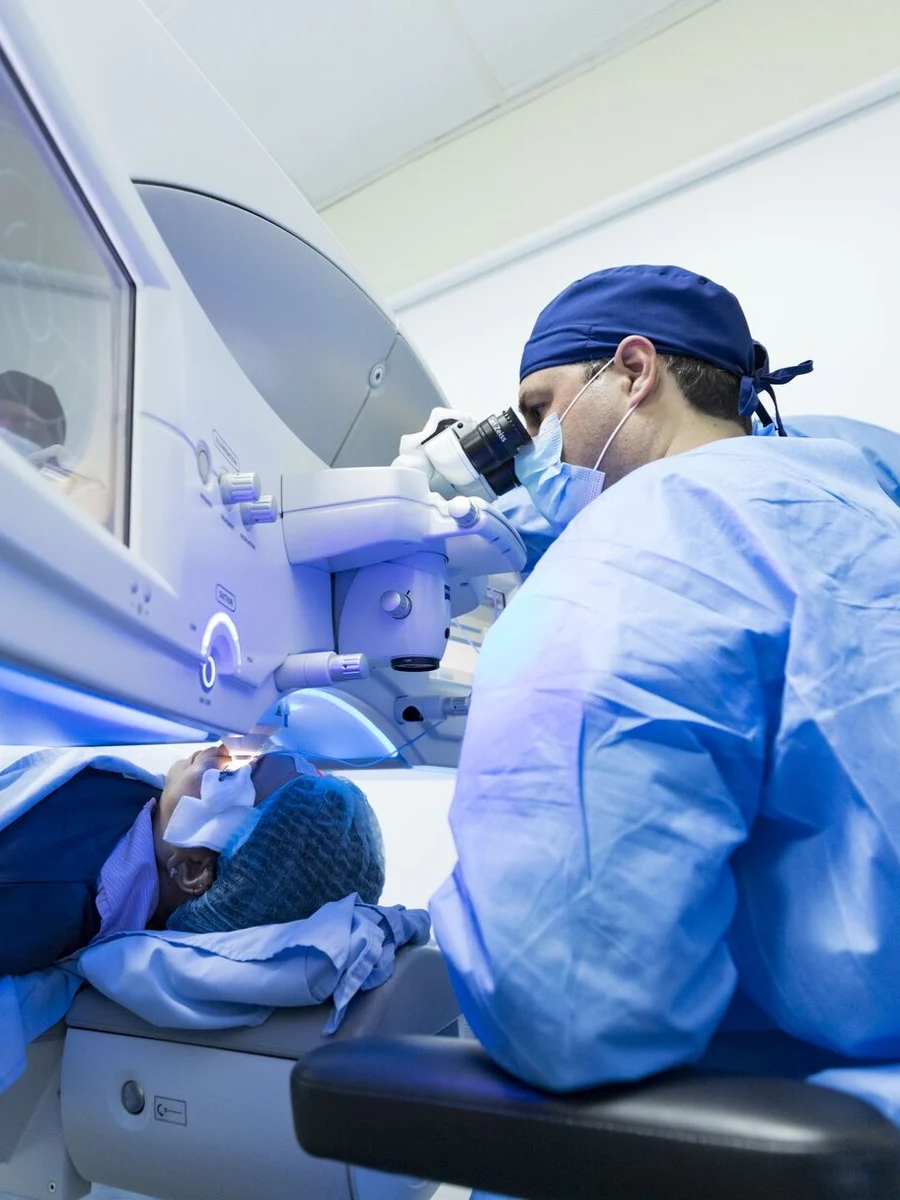
Dr. Batlle Logroño is recognized as a national pioneer and instructor of this technique, using the Zeiss VisuMax femtosecond laser to extract a small tissue disc through a micro-incision of just 2 to 4 mm.
Myopia and astigmatism in adults aged 18 to 44. Visual recovery often within 24 hours.
Corneal collagen crosslinking (CXL) uses a combination of ultraviolet light and vitamin B2 (riboflavin) to strengthen the collagen fibers of the cornea. It is the gold standard for halting the progression of keratoconus and corneal ectasia.
CCCRP introduced this technology in the Dominican Republic in 2007, being the first to have an ultraviolet light device for this procedure. Dr. Batlle Logroño has been recognized at national and international conferences for his work in this area.
Stops or slows keratoconus progression. May delay or prevent the need for a corneal transplant.
Refractive cataract surgery goes beyond simply removing lens opacity. It integrates advanced technology to simultaneously correct refractive errors such as myopia, hyperopia, astigmatism and presbyopia.
Dr. Batlle Logroño specializes in complex cases: patients with cataracts who previously underwent laser refractive surgery (PRK, LASIK, SMILE), where intraocular lens calculations require specialized techniques and formulas.
He also performs ICL implantation (implantable contact lenses) for patients with high myopia or corneas too thin for conventional laser surgery.
Corneal rings are small arcs inserted within the corneal layers to regularize its shape in patients with keratoconus and irregular astigmatism.
Dr. Batlle Logroño is recognized as a regional leader in ICRS placement (synthetic segments) and was a pioneer in the Dominican Republic in adopting the CAIRS technique, which uses human corneal tissue segments instead of synthetic material, offering greater biocompatibility.
CCCRP was the first center in the country to have the devices to prepare corneal segments and perform CAIRS, marking a milestone in 2020.