In 2020, we performed the first CAIRS procedures in the Dominican Republic at CCCRP. It was a moment we had prepared for over months: implanting segments of human corneal tissue, not plastic, inside the cornea of patients with keratoconus. A meta-analysis published in the American Journal of Ophthalmology that evaluated 442 eyes found that CAIRS produce significant improvements in visual acuity, spherical equivalent and keratometric values, with a severe complication rate below 1% (Rocha-de-Lossada et al., 2025). Those numbers confirm what we see in consultation every week: this technique works, and the eye's tolerance to human tissue is notably superior to any synthetic material.
As Co-Director of the Dominican Republic Cornea Bank, I have direct access to the donor tissue that makes this procedure possible. That combination of surgical experience, tissue access and femtosecond laser technology is what allowed us to adopt CAIRS from its earliest stages at a regional level.
What CAIRS are and why they change the approach to keratoconus
CAIRS is the acronym for Corneal Allogenic Intrastromal Ring Segments. They are pieces of human corneal tissue, obtained from donors, that are inserted into tunnels created with a femtosecond laser in the periphery of the patient's cornea. Once placed, these segments flatten the central zone of the cornea and redistribute curvature, improving the cone-shaped form that characterizes keratoconus.
The fundamental difference with traditional synthetic rings (ICRS) is the material. ICRS are manufactured with PMMA (polymethyl methacrylate), a biocompatible plastic that the eye nonetheless recognizes as a foreign body. CAIRS, being human corneal tissue, integrate with the patient's stroma in a way that no synthetic material can replicate. They do not block the passage of oxygen or nutrients, and the probability of extrusion or chronic inflammation is considerably lower.
In my practice, I adopt CAIRS from the early stages of keratoconus. The reason is simple: if we are going to intervene on a young cornea, I prefer to do so with a material that the eye can integrate as its own.
How the procedure is performed
CAIRS implantation is carried out in the operating room under topical anesthesia (drops). It does not require general anesthesia or hospitalization.
The process has two main phases:
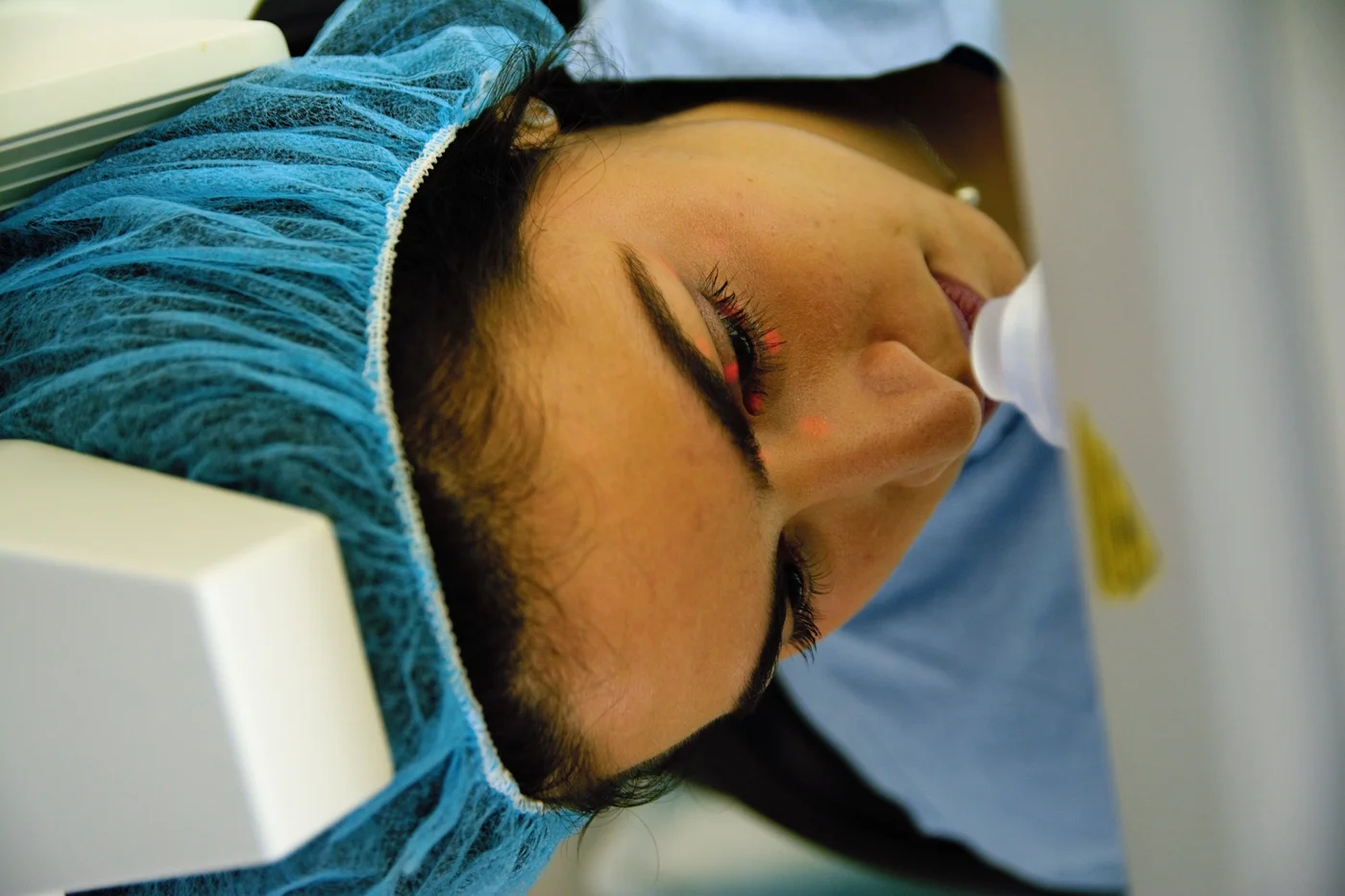
- Creation of the intrastromal tunnel. We use the VisuMax femtosecond laser to create a circular channel within the corneal stroma, at a depth calculated according to the case. The laser works with ultra-short light pulses that separate tissue without cutting it, allowing micron-level precision.
- Insertion of the segments. The CAIRS segments, prepared from donor corneal tissue, are introduced into the tunnel created by the laser. They are positioned according to the patient's topographic map to achieve the necessary flattening in the cone area.
The complete procedure lasts between 15 and 20 minutes per eye. Most patients notice visual improvement within the first 48 to 72 hours, and full stabilization is usually reached between the first and third month.
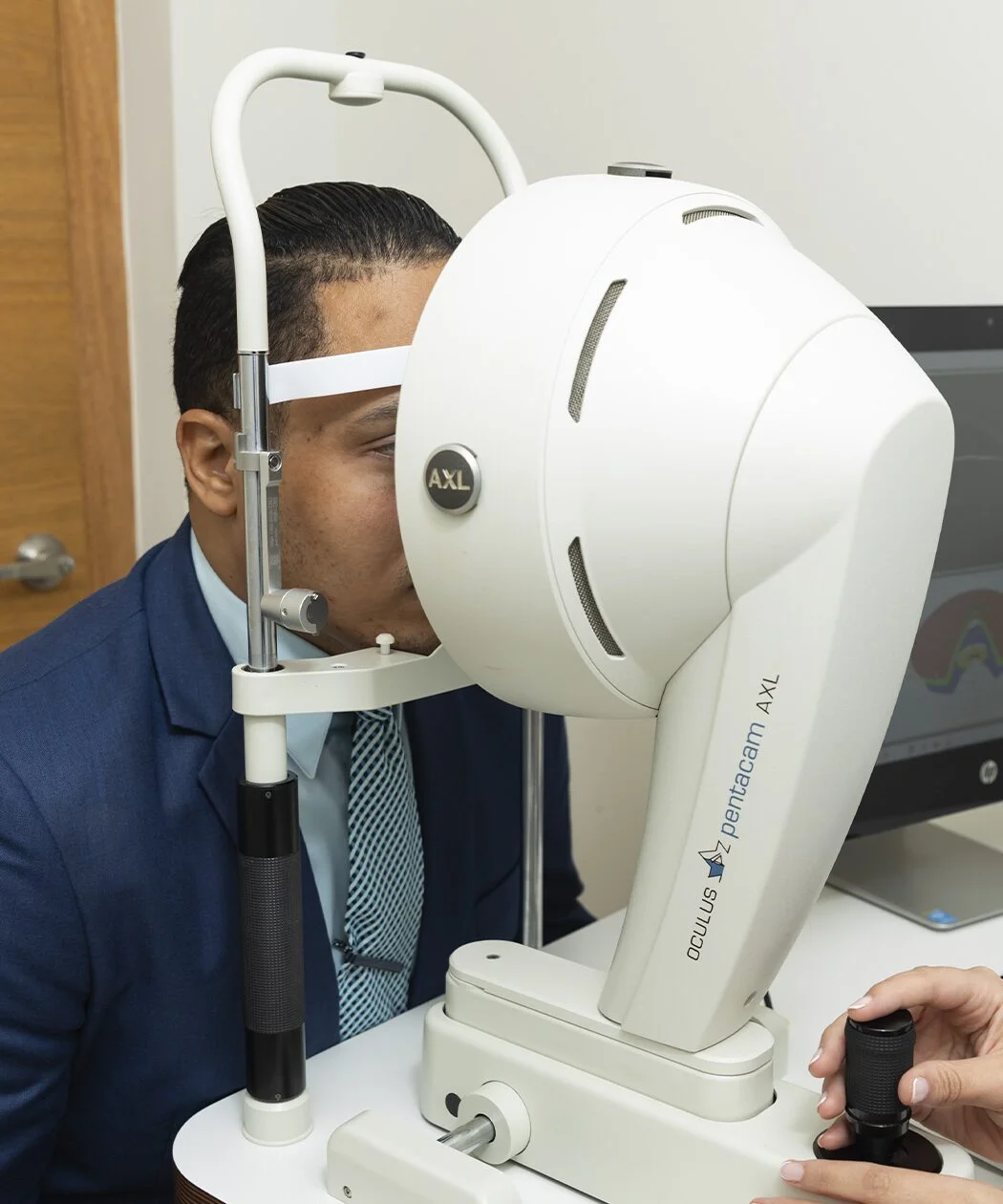
Before surgery, each patient goes through a diagnostic protocol that includes Pentacam (elevation topography), anterior segment OCT and Topolyzer. These studies allow us to map the cornea in detail, determine the optimal tunnel depth and select the thickness and length of the segments.
CAIRS vs ICRS: direct comparison
| Feature | CAIRS (human tissue) | ICRS (synthetic) |
|---|---|---|
| Material | Donor human corneal tissue | Polymethyl methacrylate (plastic) |
| Biocompatibility | High, integrates with stroma | Moderate, foreign body |
| Extrusion risk | Very low (< 0.5%) | Low to moderate (2-5%) |
| Oxygen passage | Does not obstruct | May interfere |
| Chronic inflammation | Rare | Possible long-term |
| Customization | Adjustable in thickness, length and shape | Predetermined sizes |
| Reversibility | Yes (removal possible) | Yes (removal possible) |
| Availability | Requires cornea bank | Wide commercial availability |
| Implantation technique | Femtosecond laser | Femtosecond laser or mechanical |
| Visual outcomes | Comparable or superior | Established with long track record |
My recommendation tends to lean toward CAIRS when the patient has early-to-moderate progressive keratoconus and when the logistics of donor tissue access allow it. At CCCRP, having the Cornea Bank on site, that logistics is not an obstacle.
Who CAIRS are indicated for
CAIRS can benefit a wide range of patients. There is no absolute age restriction; what matters is the degree of keratoconus and the topographic characteristics of each cornea.
Main indications include:
- Keratoconus in stages I to III (Amsler-Krumeich classification)
- Irregular astigmatism that is not satisfactorily corrected with lenses
- Post-refractive surgery corneal ectasia
- Patients who do not tolerate rigid contact lenses
- Cases where the goal is to postpone or avoid a corneal transplant
CAIRS have also shown utility as a rescue procedure. The literature reports cases in which patients with synthetic ICRS who presented complications were successfully treated with CAIRS after explantation of the synthetic ring (Jadidi et al., 2025).
One point I consider relevant: CAIRS do not cure keratoconus. They do not halt the progression of the disease. That is why, in many cases, we combine them with corneal crosslinking, which does stabilize the cornea's collagen. The combination of both procedures, stabilizing with crosslinking and improving the shape with CAIRS, is a strategy that has produced consistent results in our experience.
What to expect after surgery
Recovery after CAIRS implantation is fast compared with other corneal surgeries. The patient can return to everyday activities within 24 to 48 hours, although with certain restrictions during the first weeks.
In the first days it is normal to experience a mild foreign body sensation, tearing and light sensitivity. These symptoms usually resolve within the first week. We prescribe a regimen of anti-inflammatory and antibiotic drops that the patient follows for 2 to 4 weeks according to progress.
Vision improves gradually. Some patients perceive differences from the first or second day, but full stabilization of the refractive result takes between 1 and 3 months. During that period we perform regular check-ups to monitor segment position and corneal response.
Frequently asked questions
Are CAIRS permanent?
The segments are designed to remain in the cornea indefinitely. However, if necessary for any reason, they can be removed. The procedure is reversible.
Is there a risk of donor tissue rejection?
The risk is extremely low. Unlike a full corneal transplant, CAIRS are placed inside the stroma, a zone with very little immunological activity. The literature reports acute rejection rates below 0.3% (Jacob et al., 2024).
Do CAIRS eliminate the need to wear glasses?
In most cases, CAIRS improve uncorrected vision and also corrected vision with glasses. Many patients achieve an improvement that allows them to function without glasses for everyday activities. However, some cases may still require partial optical correction.
Can CAIRS be combined with crosslinking?
Yes, and in fact it is a frequent combination in our practice. Crosslinking stabilizes the cornea and halts the progression of keratoconus, while CAIRS improve corneal shape and visual quality. They can be performed in the same session or in separate sessions.
From what age can this procedure be performed?
There is no fixed minimum age. In adolescents with progressive keratoconus, CAIRS can be considered if the diagnostic evaluation justifies it. The decision is based on the degree of the disease, documented progression and the characteristics of the cornea.
References
- Rocha-de-Lossada C, et al. "Visual and Topographic Outcomes After CAIRS for Keratoconus: A Systematic Review and Meta-Analysis." American Journal of Ophthalmology. 2025.
- Jacob S, et al. "Corneal Allogenic Intrastromal Ring Segments: A Literature Review." Journal of Clinical Medicine. 2024;14(4):1340.
- Jadidi K, et al. "The role of CAIRS implantation after failed synthetic ICRS: A rescuer." Eye and Vision. 2025.