The Dominican Republic has accumulated more than four decades of history in refractive surgery, a fact that surprises many international colleagues when I mention it at conferences. According to records from the Dominican Medical College and the Dominican Society of Ophthalmology, our country was one of the first in the Caribbean to incorporate excimer laser technology for vision correction, in 1994. That history did not begin in an abstract laboratory. It began with my father, Dr. Juan F. Batlle Pichardo, in a clinic where the ambition was not commercial but clinical: to give the Dominican patient access to the same things that existed in Miami or New York.
I write this article from an unusual perspective. Not as a surgeon presenting a technique, but as the son of a pioneer who grew up watching how refractive ophthalmology was built in this country, procedure by procedure. And as a professional who now has the responsibility of continuing that trajectory with the tools of his own generation.
The foundations: Dr. Juan F. Batlle Pichardo and the beginning of it all
My father trained as a physician at Duke University and completed his fellowship in retina and vitreous at the Bascom Palmer Eye Institute, considered the number one ophthalmology program in the world. When he returned to the Dominican Republic, the specialty's landscape was limited. Cataract surgery was performed with techniques we would today consider rudimentary, and refractive surgery simply did not exist in the country.
In 1978, Dr. Batlle Pichardo began performing radial keratotomy (RK), a procedure that used manual incisions in the cornea to correct myopia. It was a technique with important limitations, but it represented the first concrete step toward surgical correction of refractive errors on Dominican soil.
What followed was a sequence of decisions that would transform the specialty locally. In 1985, my father brought the first intraocular lenses and the first phacoemulsification equipment for advanced cataract surgery to the country. Until then, having cataract surgery in the Dominican Republic meant a very different experience from what we know today. The incorporation of that technology radically changed surgical outcomes.
But his vision went beyond private practice. Dr. Batlle Pichardo founded the ophthalmology department at Hospital Elias Santana, created the Dominican Republic Cornea Bank (which still operates today and which I co-direct), and established the Laser Center, the direct precursor of what is now CCCRP. Each of these institutions responded to a concrete problem he identified: lack of local training, lack of corneal tissue for transplants, lack of access to laser technology.
1994: the excimer laser arrives in the country
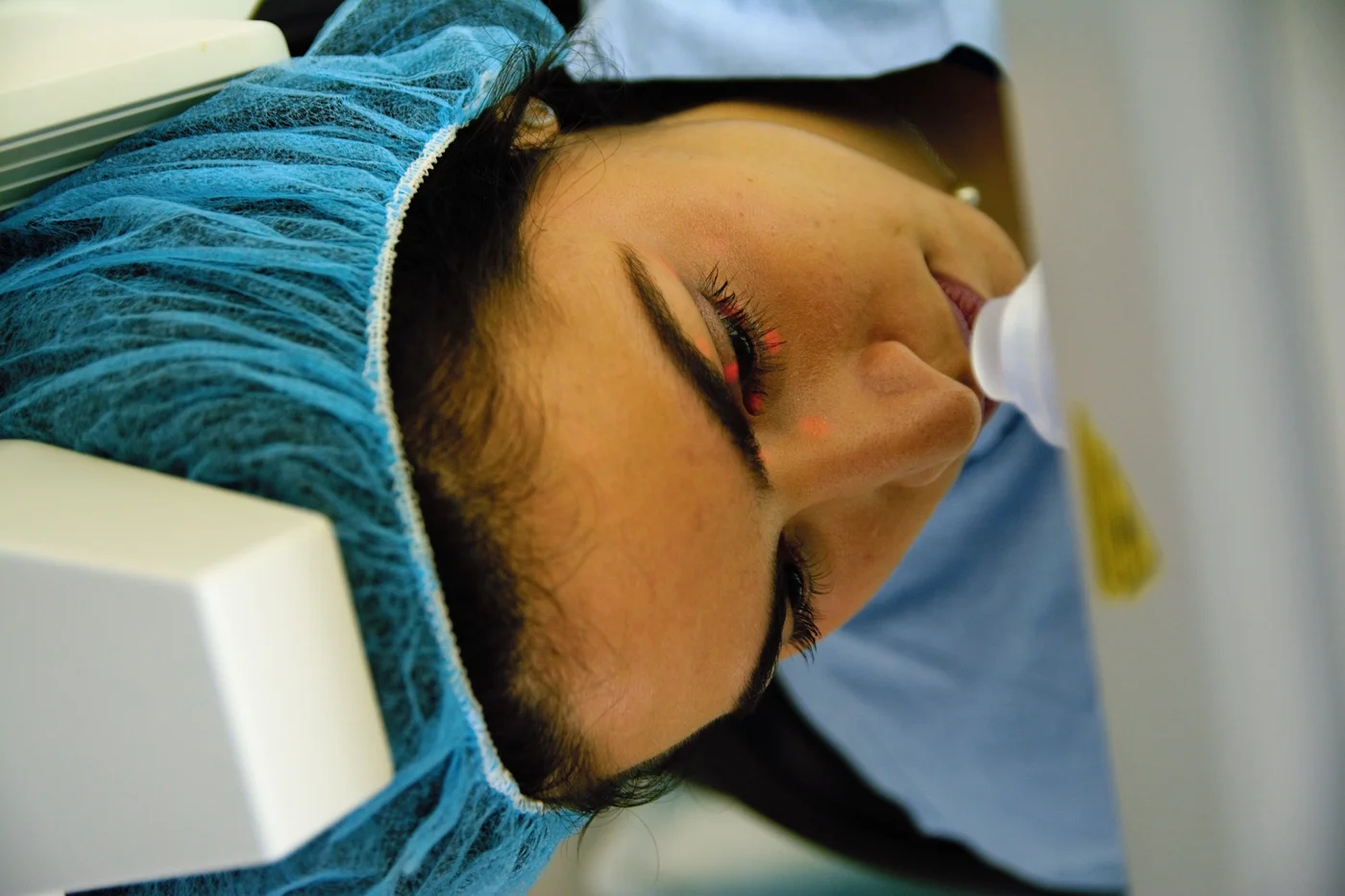
The moment that marked a before and after was 1994, when Dr. Batlle Pichardo installed the country's first excimer laser and began performing Advanced Surface Ablation (ASA). To put it in context, the excimer laser had been approved by the FDA just a year earlier. The gap between U.S. approval and its availability in the Dominican Republic was minimal, something remarkable for the time.
ASA made it possible to correct myopia and astigmatism by vaporizing corneal tissue with micrometric precision. Patients who previously depended on thick lenses or did not qualify for radial keratotomy now had a real alternative. Recovery was slower than with current techniques and postoperative discomfort was greater, but the visual results represented an enormous qualitative leap.
Two years later, in 1996, my father developed prototypes of implantable collamer lenses (ICL), a line of research that sought solutions for patients with high prescriptions who could not be treated with laser alone. This capacity to look beyond the dominant technique of the moment and explore alternatives was something that defined his career.
The transition: from LASIK to femtosecond
In 1998, CCCRP incorporated the first microkeratomes for advanced LASIK (SBK, sub-Bowman keratomileusis), and shortly afterward the femtosecond laser. The femtosecond represented another revolution: it made it possible to create the corneal flap with a laser instead of a mechanical blade, which increased the precision and safety of the procedure.
Over the following years, technology continued to accumulate. In 2007 we brought the first ultraviolet light equipment for Corneal Crosslinking (CXL) to the country, a procedure that strengthens the cornea weakened by keratoconus. In 2011, we performed the first femtosecond-assisted cataract surgery (FLACS) in the country. In 2012 we incorporated intracorneal ring segments (ICRS) as an option for patients with keratoconus who needed to regularize their cornea before considering other interventions.
Each technological incorporation responded to the same principle: expanding the available options so that more patients could receive personalized treatment. It was not about accumulating equipment for prestige, but about having the necessary tools to avoid telling a patient "this cannot be done here."
My generation: SMILE, advanced CXL, and CAIRS
I trained as a physician at Tulane University and completed my fellowship in cornea and refractive surgery at the Bascom Palmer Eye Institute, the same program where my father trained decades earlier, though in a different subspecialty. He specialized in retina and vitreous. I chose cornea and refractive. That difference was not accidental: when returning to the Dominican Republic, I wanted to dedicate myself to the area where I saw the greatest potential for technological evolution.
In 2017, I introduced ReLEx SMILE to the country. SMILE makes it possible to correct myopia and astigmatism through an incision of just 2 to 4 millimeters, without creating a corneal flap. The technique changes the risk equation for the patient: less involvement of corneal nerves, lower incidence of postoperative dry eye, and greater preservation of the eye's biomechanical structure.
Bringing SMILE to the Dominican Republic was a process that involved specific training, investment in equipment (the Zeiss VisuMax laser), and a period of internal validation in which we compared our results with those reported in international literature. The results were consistent, and SMILE was integrated as one more option within the range of techniques we offer at CCCRP.
But the advance I consider most significant in my trajectory is CAIRS (Corneal Allogenic Intrastromal Ring Segments). We began performing this procedure in 2020, being the first in the country. CAIRS uses donor corneal tissue segments to reinforce corneas weakened by keratoconus, combining the benefits of traditional intracorneal rings with the biocompatibility of human tissue. It is a technique that directly leverages the infrastructure of the Cornea Bank that my father founded decades ago, which gives this story a coherence that was not planned but that is nonetheless evident.
The complete timeline
When I look back and chronologically order what has happened at CCCRP, the accumulation of capabilities is notable:
- 1978: radial keratotomy (RK/AK), the first surgical refractive corrections in the country.
- 1985: advanced cataract surgery with intraocular lenses, first phacoemulsification equipment.
- 1994: ASA with excimer laser, laser refractive correction for the first time in the Dominican Republic.
- 1996: ICL prototypes, exploration of implantable lenses for high prescriptions.
- 1998: SBK/advanced LASIK, microkeratomes and femtosecond for flap creation.
- 2007: Corneal Crosslinking (CXL), first UV equipment for keratoconus treatment.
- 2011: FLACS, first femtosecond-assisted cataract surgery.
- 2012: ICRS, intracorneal rings for keratoconus.
- 2017: ReLEx SMILE, lenticule extraction without flap, national pioneers.
- 2020: CAIRS, intrastromal segments of donor corneal tissue, first in the country.
That is more than forty years of continuous incorporation. Not all procedures are performed by the same surgeon, nor do they address the same pathology, but they all share a common thread: the conviction that the Dominican patient deserves access to the best technology available at any given time.
What it means to inherit a trajectory
There is something that is not taught in fellowships or at conferences: what it means to operate in the same operating room where your father operated for decades. I am not talking about family pressure. I am talking about a responsibility that goes beyond the technical. When a patient arrives at CCCRP, they are often referred by someone who was operated on by my father twenty years ago. The trust they place is not only in my training. It is in an institution and in a surname that has been present in Dominican ophthalmology for more than four decades.
That continuity has a practical value in addition to a symbolic one. The Cornea Bank founded by Dr. Batlle Pichardo is what makes it possible for me today to perform CAIRS with locally processed donor tissue. The training infrastructure he created is the foundation on which we train the next generation of Dominican ophthalmologists. And the institutional culture of CCCRP, where each new technique is incorporated only after rigorous validation, is something I inherited and maintain.
My father laid the foundations. My responsibility is to build on them with the tools of my time, and to prepare the ground for what comes next.
Frequently asked questions
Is CCCRP the oldest refractive surgery center in the Dominican Republic?
CCCRP has its roots in the Laser Center founded by Dr. Juan F. Batlle Pichardo in the 1990s, which makes it one of the institutions with the longest trajectory in refractive surgery in the country. The institutional continuity, from the first radial keratotomies in 1978 to current CAIRS procedures, has no parallel in the Caribbean region.
What training do CCCRP surgeons have?
Dr. Juan F. Batlle Pichardo trained at Duke University with a fellowship at the Bascom Palmer Eye Institute (retina and vitreous). Dr. Juan F. Batlle Logroño trained at Tulane University with a fellowship at the Bascom Palmer Eye Institute (cornea and refractive surgery). Both completed their training at institutions internationally recognized as the best in their field.
What technologies are currently available at CCCRP?
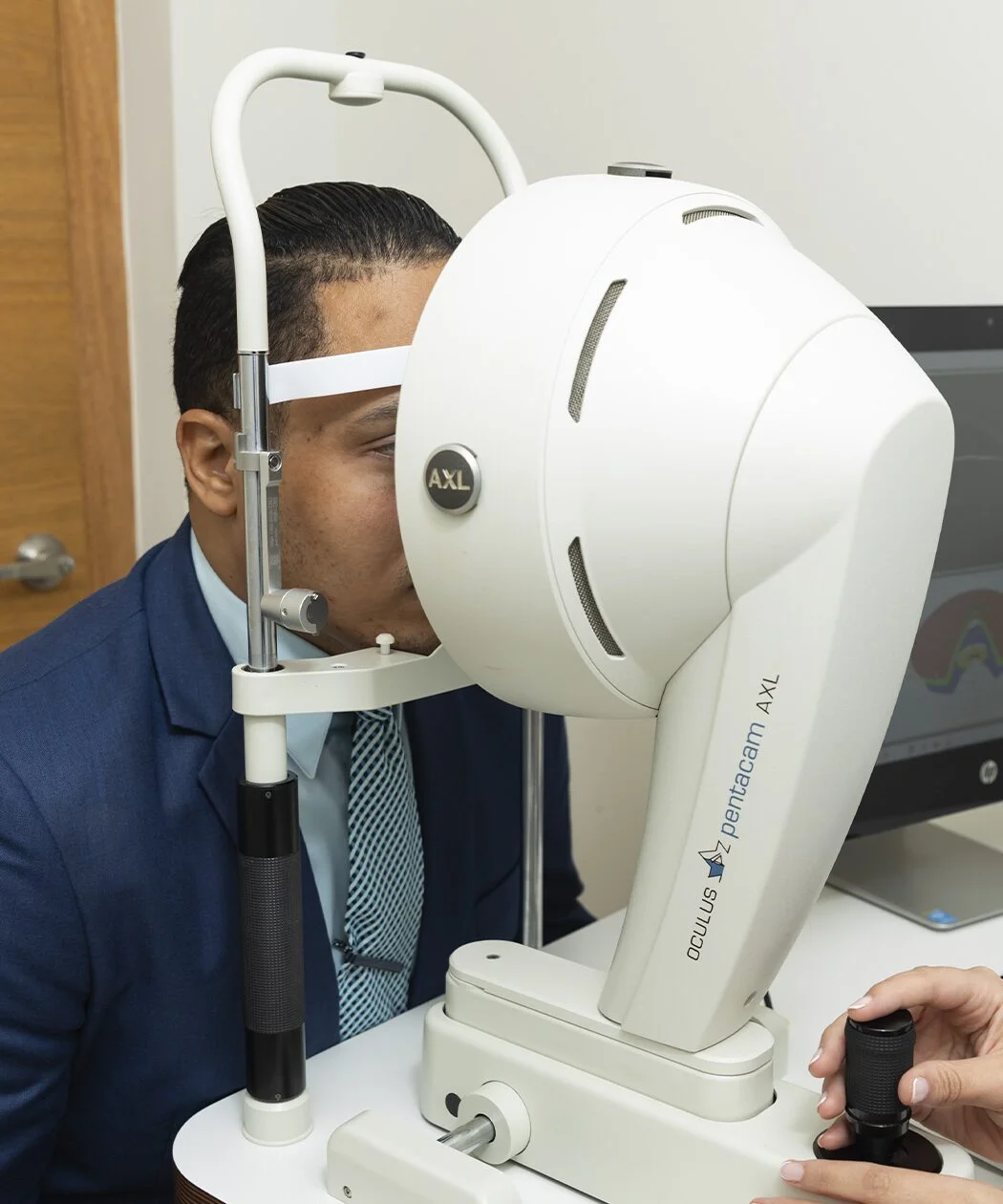
CCCRP offers the full spectrum of modern refractive surgery: ASA, SBK/advanced LASIK, ReLEx SMILE, ICL lenses, Corneal Crosslinking, intracorneal rings, and CAIRS. The preoperative evaluation determines which technique is most suitable for each patient.
What is CAIRS and why is it relevant for patients with keratoconus?
CAIRS (Corneal Allogenic Intrastromal Ring Segments) uses segments of human donor corneal tissue to reinforce weakened corneas. Unlike traditional synthetic rings, biological tissue offers better integration with the patient's cornea. CCCRP was the first center in the Dominican Republic to perform this procedure.
References
- Dominican Society of Ophthalmology. Historical record of ophthalmological technology in the Dominican Republic. Institutional archive.
- Randleman JB, et al. "Corneal Allogenic Intrastromal Ring Segments (CAIRS) for Keratoconus." Journal of Refractive Surgery. 2021.