By the year 2050, almost half of the world's population will be myopic. This is not a figure meant to alarm: the study by Holden and colleagues, published in Ophthalmology in 2016 covering 145 studies and 2.1 million participants, projects that 49.8% of the planet (about 4,758 million people) will have myopia, and 9.8% will have high myopia. In the year 2000 those figures were 22.9% and 2.7%. In Latin America, a 2024 meta-analysis already finds that close to 1 in 11 children and adolescents is myopic. Myopia is on its way to becoming the most common eye condition in existence.
And here is the point I most want to convey to you as an ophthalmologist: the underlying problem is not the prescription. Almost all of us think of myopia as "I need stronger glasses to see far away." That is only the symptom. Myopia, in most progressive cases, is an eye that grew too long. And an eye that grows too long is an eye that stretches on the inside, for life. Seeing well with glasses or contact lenses solves the day to day, but it does not touch that structural root. That is why it is worth understanding myopia not as a prescription defect, but as a condition that accompanies the eye throughout the whole of life, with distinct stages and a distinct specialist in each one.
Myopia is an eye that grows too long, not a higher prescription
A healthy eye with no defect (what we call an emmetropic eye) measures on average close to 23.5 millimeters from front to back. That length, added to the curvature of the cornea and the crystalline lens, makes the image fall exactly on the retina. In myopia, what happens in most cases is that the eyeball lengthens: it grows along its antero-posterior axis more than it should. We call that measurement the axial length, and it is the true protagonist of this story. An eye with high myopia can exceed 26 millimeters, and the most severe cases go beyond 30.
What is important to understand is that the eye does not make new tissue when it lengthens. It stretches it. The retina, the choroid (which is the layer of blood vessels that nourishes the retina) and the sclera thin out as they stretch, just like the wall of a balloon when it is inflated. That stretching is chronic and silent. It thins and tensions the peripheral retina, which predisposes it to tears. It reduces the blood supply to the macula, which is the center of fine vision. It deforms the head of the optic nerve, where glaucoma originates. And it alters the crystalline lens, which brings cataracts forward.
In clinical terms, we speak of high myopia when the prescription reaches −6.00 diopters or more and the axial length reaches or exceeds 26 millimeters. I give you that number because it changes the conversation. When a patient understands that their myopia is a measure of how much their eye has stretched, and not just the number on their glasses prescription, they also understand why the care does not end when they take off their lenses.
Why it matters: what the stretching does to the eye over the years
This is where the numbers confirm what we see in the clinic. The reference meta-analysis on the complications of myopia, by Haarman and colleagues, published in Investigative Ophthalmology & Visual Science in 2020, measured how much more likely each disease is in a high myopic eye compared to an eye without defect. The numbers are striking:
- Myopic macular degeneration: up to 845 times more likely in high myopia. It is the damage to the center of vision from stretching and thinning of the macula.
- Retinal detachment: about 12.6 times more likely. The thinned peripheral retina tears and separates.
- Early cataract: posterior subcapsular cataract is about 4.5 times more likely, and nuclear cataract close to 2.9 times. The myopic eye develops cataracts earlier.
- Glaucoma: the risk rises gradually with the prescription, from an odds ratio of 1.50 in low myopia up to 4.14 in high myopia, according to a dose-response meta-analysis published in American Journal of Ophthalmology.
There is one piece of data I usually share with patients who have very high myopia because it puts the priorities in order. In the Dutch cohort of Tideman and colleagues (2016), the risk of non-correctable visual impairment from the age of 75 onward rises sharply with axial length: in eyes of 30 millimeters or more, that risk exceeds 90%. It is not a sentence, it is a call to vigilance.
The most important conclusion of all this evidence, and the one that changes the discourse of "myopia control," is the one from Haarman's own meta-analysis: although high myopia concentrates the greatest risk, low and moderate myopia also raise it considerably. There is no "safe" level of myopia. In my experience, that sentence reorders the conversation with any myopic patient, whatever their prescription.
Where it comes from: genes and environment, not a single cause
Myopia is multifactorial. It is not solely the fault of screens nor pure genetic destiny: it is the interaction of both. On the hereditary side, having one myopic parent roughly doubles the child's risk, and having two myopic parents multiplies it close to five times.
On the environmental side, the factor with the best evidence is one that surprises many parents: time outdoors. The Guangzhou trial, published in JAMA in 2015, added 40 minutes of daily outdoor activity at school and reduced the cumulative three-year incidence of myopia from 39.5% to 30.4%. The threshold that has become popular, two hours a day outdoors, has real backing: children who meet that time showed lower risk even with a lot of close work or with two myopic parents. The proposed mechanism is high-intensity outdoor light, which stimulates dopamine in the retina and slows the growth of the eye, not simply "looking into the distance."
And screens? The evidence does not point to the device itself as an isolated direct cause. The pattern that does worry us is the combination of a lot of close work and little time outdoors, on top of a genetic load. The recommendation with the best support is not to ban the tablet, but to increase time outdoors and to take regular breaks. An honest nuance from the 2024 Cochrane review is worth noting: the outdoors prevents better than it reverses. Once myopia sets in, slowing its progression requires other tools.
Childhood: the window to slow it (the territory of the pediatrician and the optometrist)
Here I must be clear about the lanes, because honesty about what each specialist does is part of the service. The stage of controlling progression in children and adolescents is not my area of direct practice. It is the territory of the pediatric ophthalmologist and the optometrist, and it is they who manage these tools. I mention them because understanding that this window exists is key for any family with a myopic child, and because it marks the first stage in the journey of the myopic eye.
The good news is that in childhood there is indeed a way to slow the growth of the eye, with a reduction in progression that, depending on the technique, ranges from 30 to 70%. The options with the best evidence today are several:
- Low-concentration atropine: atropine at 0.05% showed in the LAMP study (Yam and colleagues, 2019) a reduction of close to 67% in the advance of the prescription and 51% in axial elongation at one year, with the best balance between efficacy and side effects.
- Peripheral defocus lenses: Stellest-type glasses reduce progression by close to 67% and axial elongation by around 53% with use of at least 12 hours a day. The MiSight contact lens reduces the prescription by close to 59% and the axial length by 52% over three years.
- Orthokeratology (ortho-K): rigid lenses for nighttime wear that reduce axial elongation, with a variable response depending on the patient.
- Time outdoors: the baseline preventive measure, before myopia appears.
The criterion common to all of them is that they seek to slow axial elongation, not just to lower the prescription. Surgery does not apply in children. If you have a myopic child, the first step is to see the pediatric ophthalmologist or the optometrist to assess control of the progression while the window is still open.
Adult life: this is where I come in
When the eye finishes growing, the prescription tends to stabilize. According to the COMET data, 77% of myopes stabilize by age 18, 90% by 21 and 96% by 24. From there opens the stage that truly is my territory: refractive surgery in the adult.
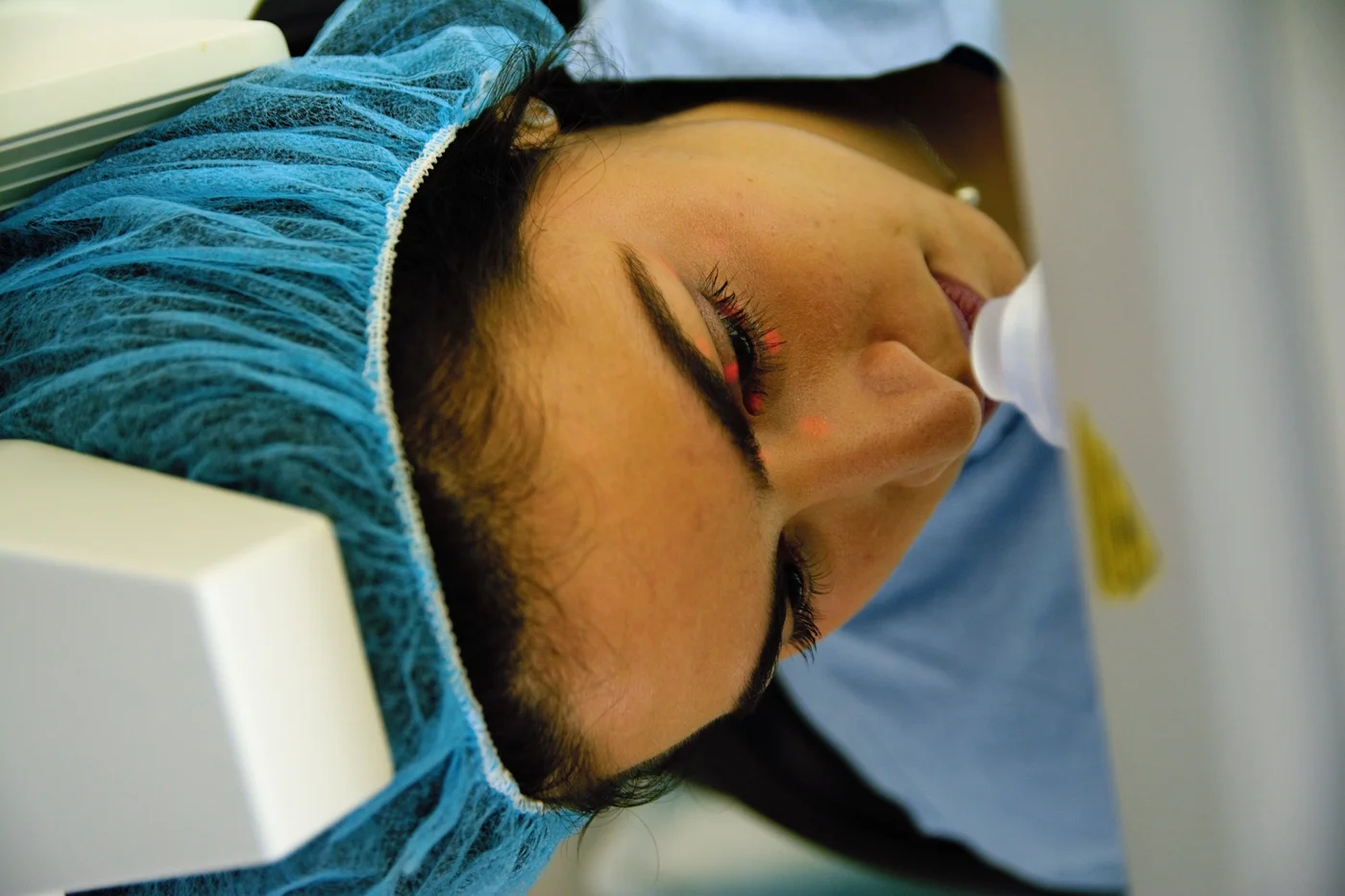
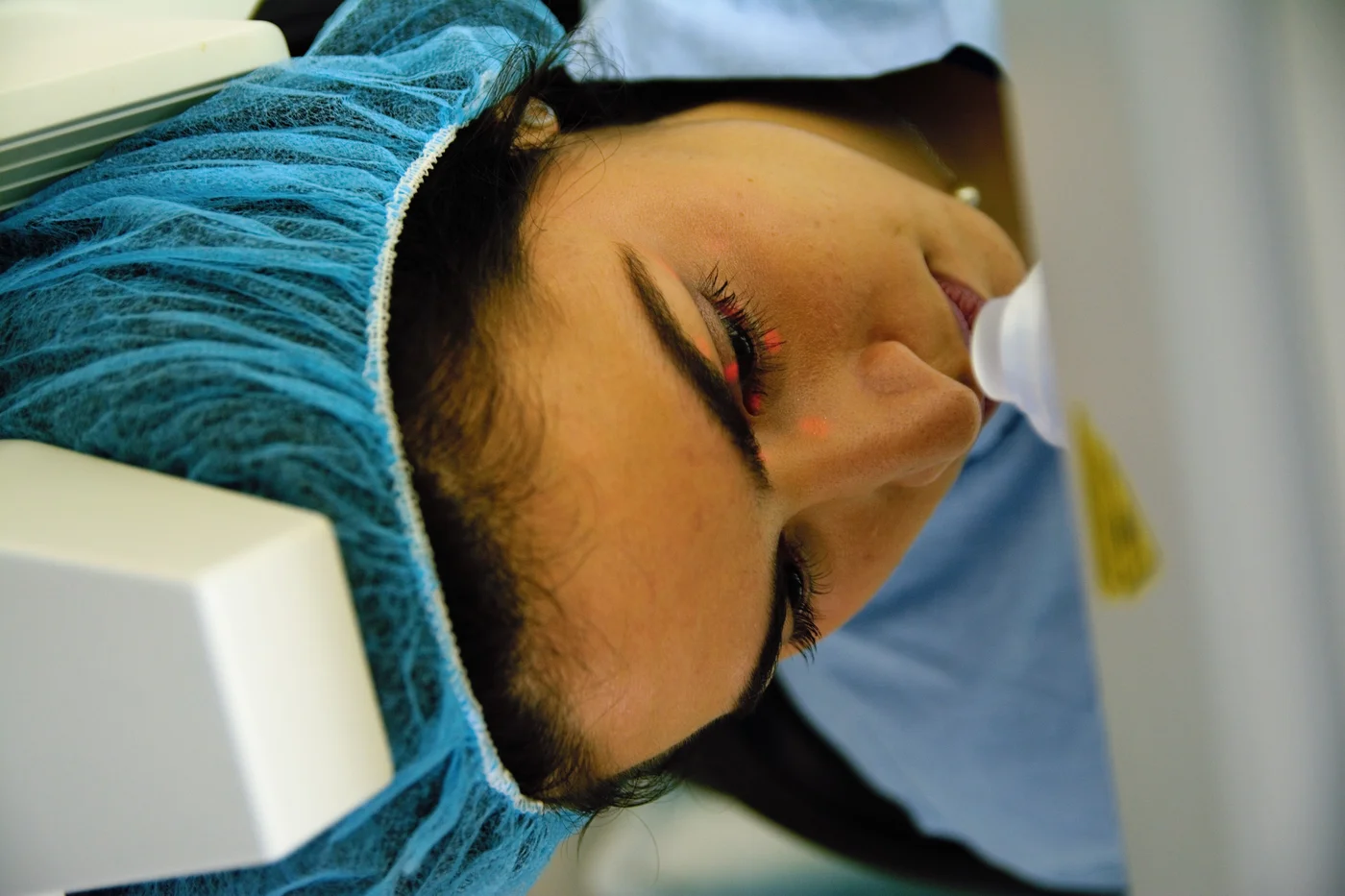
I want to be honest about what surgery does and what it does not do. Refractive surgery does not cure or reverse myopia. The eye remains long and keeps its retinal risk. What surgery achieves, and it is no small thing, is to free the patient from dependence on glasses or contact lenses, reshaping the cornea with a laser or adding an intraocular lens. We take away the lenses, but the care of the myopic eye continues. That distinction is the basis of an honest conversation with every patient.
The techniques are not interchangeable, and choosing the correct one is the true work of the cornea surgeon:
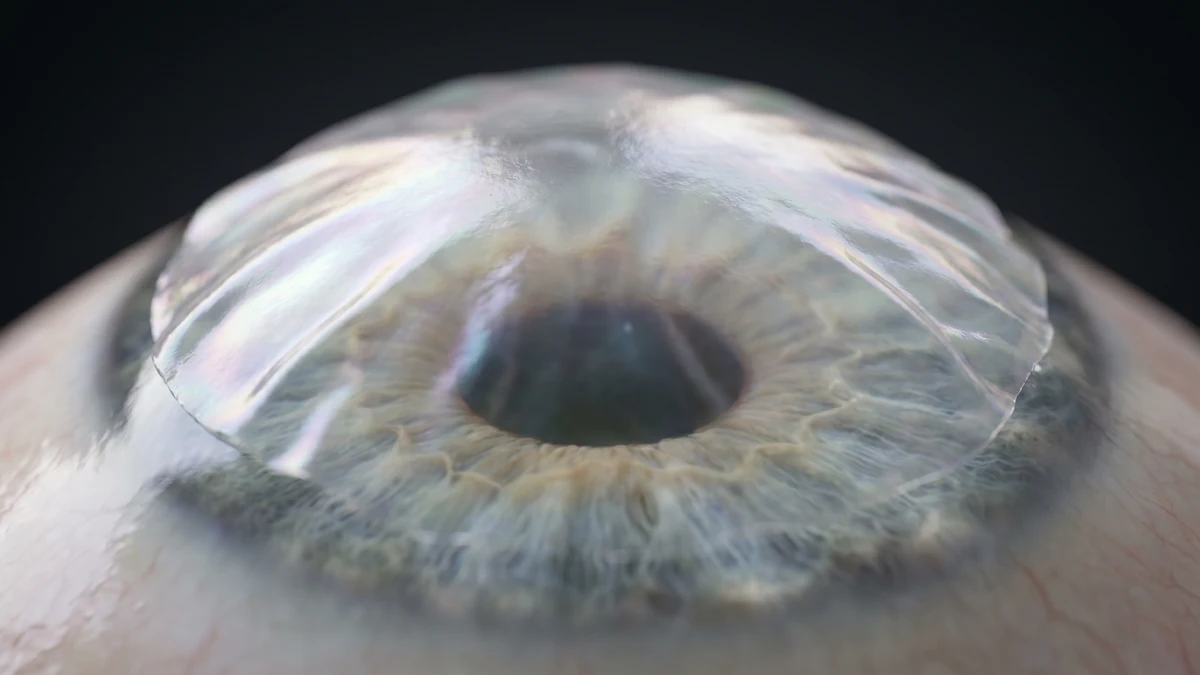
- SMILE: extraction of a lenticule of tissue through a microincision, without the need to create a flap, which better preserves the biomechanical integrity of the eye. It corrects myopia from −1.00 to −10.00 diopters with astigmatism of up to −3.00. I am the national pioneer of this technique in the Dominican Republic and I teach it as an instructor.
- LASIK and Femto-LASIK: corneal flap plus excimer laser ablation, a mature and precise technique for prescriptions up to close to −8 to −10 diopters.
- PRK / ASA: surface ablation without a flap, indicated for thinner corneas or professions with a risk of ocular trauma.
- ICL (implantable phakic lens): a lens placed in front of the crystalline lens, without touching the cornea. It is the correct tool for high myopia, where the laser is no longer safe.
The expert point, and the one that distinguishes a cornea surgeon, is not knowing how to operate with a laser. It is knowing when not to use it. Beyond a certain prescription, the cornea should not be thinned further, and there "more laser" is the wrong answer. In those cases the ICL is the correct option. It is not a universal solution. It is one more option, available for the patient in whom the combination of prescription, corneal thickness and ocular health allows it. This depends on the case. If you are interested in the detail of how the technique for myopia is chosen, I wrote about refractive surgery with SMILE in another article.
The older myope: the cataract and why your history matters decades later
Here the arc closes, and this is where the myopic eye returns to my hands. The myopic eye develops cataracts earlier: let us recall that posterior subcapsular cataract is about 4.5 times more likely in high myopia. When the time comes to operate on the cataract, the high myopic eye presents challenges that an expert surgeon must anticipate.
The first is the calculation of the intraocular lens in long eyes. Standard formulas lose precision at extreme axial lengths, with a tendency toward refractive surprises, which is why new-generation formulas and high-precision optical biometry are needed.
The second, and the most delicate, is the eye that has already undergone refractive surgery. After myopic LASIK, PRK or SMILE, the devices that measure the cornea overestimate its real power, which leads to a hyperopic surprise if conventional formulas are used. Here one must turn to dedicated calculators, such as the ASCRS one, and to specific formulas such as Barrett True-K or EVO. And this directly connects the two stages of my practice: the patient I operated on for refractive surgery at 30 returns to my hands at 65 for the cataract, and their refractive history is critical information to correctly calculate their new lens. The same specialist who understood their cornea when young is the one who best calculates their lens when older. That continuity of care in the myopic eye is not marketing, it has real clinical value. About the other life stage of the refractive eye, presbyopia, I addressed a case in this article on presbyopia after LASIK.
The third challenge is surgical: the high myopic eye has a greater risk of retinal detachment after cataract surgery, with laxer capsules, which demands careful planning and retinal follow-up.
The visual plan of a whole life
If I bring all of the above together, the myopic eye travels a path with clear stages, and in each one the person who best masters it intervenes. In childhood, the pediatrician and the optometrist work to slow the progression while the window is open. In youth, once the prescription is stable, refractive surgery frees one from lenses. And throughout life, the high myopic eye needs vigilance of the retina, the macula and the optic nerve, because the structural risk persists even if glasses are no longer worn. Later comes the cataract, which in the myope is operated on with a precision calculation.
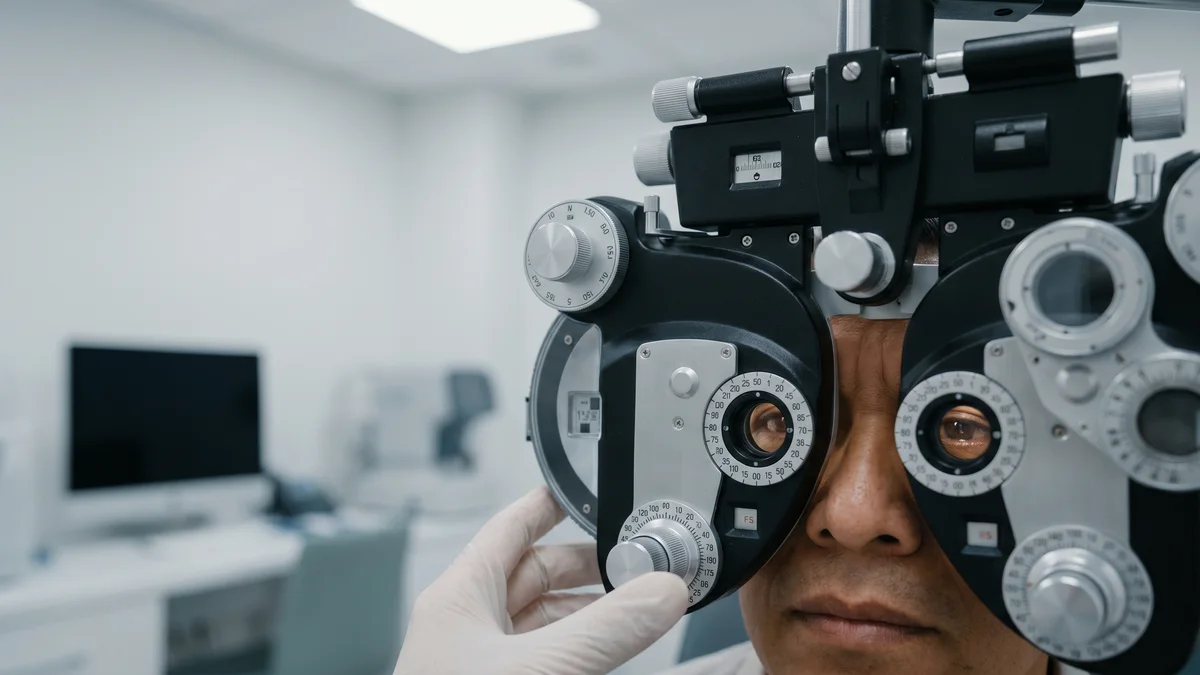
Understanding myopia as what it is, an eye that grew too long and that stretches on the inside, transforms the way one cares for it. Glasses and surgery solve the vision. The health of the myopic eye is cared for with follow-up, at any age. If you are myopic, or have a child who is, the most valuable thing you can do is to place yourself in the hands of the correct specialist for the correct stage. As far as the adult life of the myopic eye is concerned, that is the conversation I have every week in the clinic. You can learn about the cornea and refractive surgery services we offer to accompany that decision.
Frequently asked questions
Does wearing glasses make eyesight worse or make the eye dependent on them?
No. Peer-reviewed studies consistently show that correcting vision with glasses does not accelerate the progression of myopia. The eye changes because of its own growth, not because of wearing lenses. In fact, giving less prescription than needed (undercorrecting) does not slow myopia and may accelerate it, so that myth is worth dismantling.
Does surgery cure myopia?
It does not cure it. It removes the dependence on glasses or contact lenses by reshaping the cornea or adding a lens, but the eye remains longer and keeps its retinal risk for life. That is why the operated myopic eye still needs monitoring of the retina, the macula and the optic nerve. It is a freedom from lenses, not an erasing of the risk.
Does myopia stop progressing at a certain age?
In most cases yes, but later than people think. According to the COMET study, 77% stabilizes by age 18, 90% by 21 and 96% by 24. A minority keeps progressing between 20 and 30 years of age, and that is why refractive surgery requires a stable prescription before operating.
Do screens cause myopia?
The evidence does not point to the screen itself as an isolated direct cause. The risk pattern is a lot of close work combined with little time outdoors, on top of a genetic predisposition. The best-supported measure is to increase time outdoors, at least two hours a day, and to take regular breaks, not to ban the device.
I have very high myopia and was told I am not a candidate for LASIK. What options do I have?
The laser has a limit: beyond a certain prescription, the cornea should not be thinned further. For high myopia the correct option is usually the ICL, a phakic lens implanted without touching the cornea. The evaluation with topography and corneal thickness measurement is what defines which technique is safe in your case.
Medical disclaimer
This article is for educational and informational purposes and does not replace an ophthalmological consultation. Decisions about myopia control, refractive surgery or cataract surgery depend on a complete evaluation that includes refraction, corneal topography, pachymetry, axial length measurement and a study of the fundus of the eye. The risks described are population probabilities and do not predict the course of an individual case. Results vary between patients. Consult an ophthalmologist, and for matters of cornea and refractive surgery a subspecialist in that area, before making decisions about your visual health.
References
- Holden BA, Fricke TR, Wilson DA, et al. Global Prevalence of Myopia and High Myopia and Temporal Trends from 2000 through 2050. Ophthalmology. 2016;123(5):1036-1042.
- Galvis V, et al. Myopia Prevalence in Latin American Children and Adolescents: A Systematic Review and Meta-Analysis. Cureus. 2024.
- Haarman AEG, Enthoven CA, Tideman JWL, et al. The Complications of Myopia: A Review and Meta-Analysis. Investigative Ophthalmology & Visual Science. 2020;61(4):49.
- Tideman JWL, et al. Association of Axial Length With Risk of Uncorrectable Visual Impairment for Europeans With Myopia. JAMA Ophthalmology. 2016.
- Degree of Myopia and Glaucoma Risk: A Dose-Response Meta-analysis. Ophthalmology.
- He M, et al. Effect of Time Spent Outdoors at School on the Development of Myopia Among Children in China. JAMA. 2015.
- Kido A, et al. Interventions to increase time spent outdoors for preventing incidence and progression of myopia in children. Cochrane Database of Systematic Reviews. 2024.
- Yam JC, et al. Low-Concentration Atropine for Myopia Progression (LAMP) Study. Ophthalmology. 2019.
- American Academy of Ophthalmology. Refractive Surgery Preferred Practice Pattern. 2022.
- American Academy of Ophthalmology. IOL Power Calculations in Eyes with Previous Corneal Refractive Surgery. Ophthalmology.
Educational article by Dr. Juan F. Batlle Logroño, ophthalmologist subspecialized in cornea and refractive surgery, MD from Tulane University and Fellow of the Bascom Palmer Eye Institute. Co-Director of the Cornea Bank of the Dominican Republic and of CCCRP. National pioneer of ReLEx SMILE in the Dominican Republic. Practices at Centro Láser, Santo Domingo.